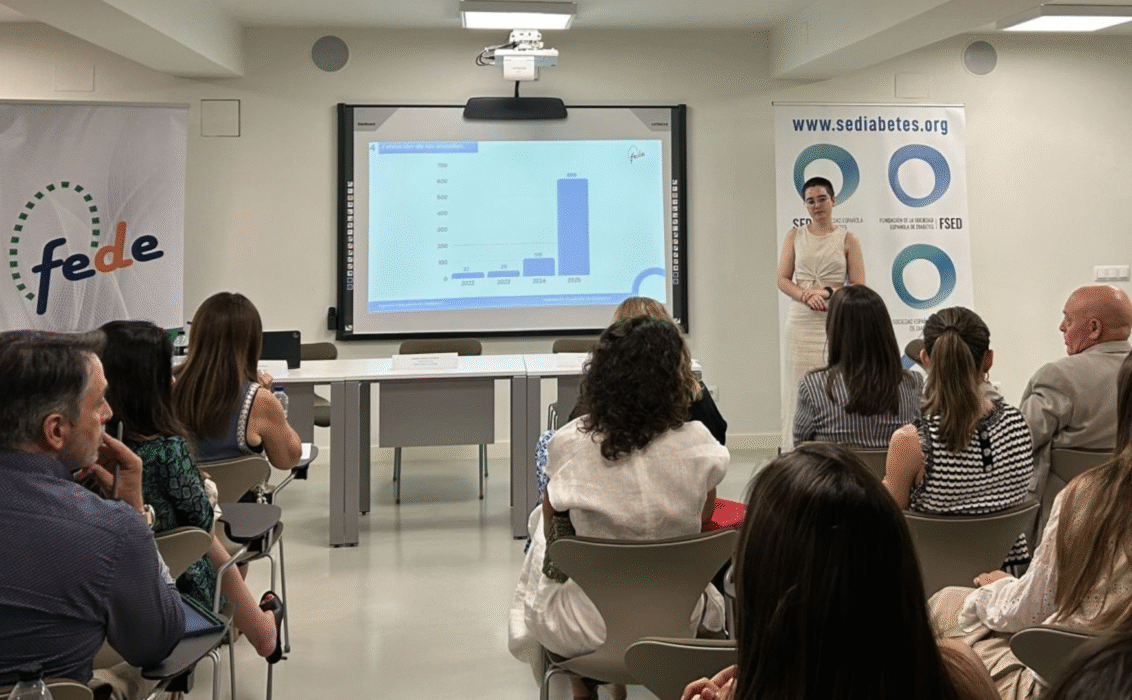
On June 24, the Spanish Diabetes Federation (FEDE) celebrated an important milestone in therapeutic education with its fourth Conference on “The role of the diabetes education agent”. The event, held at the Spanish Diabetes Society Foundation (FSED) in Madrid, brought together policymakers, healthcare professionals, people living with diabetes (PwD) and diabetes associations to highlight the success of the “Diabetes Education Agent” programme.
Since its launch, the initiative has been a cornerstone of FEDE’s mission to empower PwD – particularly young adults – to take an active role in their care and become peer educators within their communities. Based on the Stanford peer education methodology, the programme provides structured, online training that strengthens self-management skills, builds knowledge on diabetes and facilitates peer support across Spain.
This year’s edition of the training saw record participation, with 603 individuals completing the programme – a fivefold increase from 2024. Participants included PwD (47.3%), family members (28.2%), caregivers (18.2%) and others (6.4%), demonstrating the initiative’s broad and inclusive reach. Notably, 20% of participants were young adults aged between 18-25 years, aligning with FEDE’s goal to nurture the next generation of diabetes educators.
Meaningful outcomes for individuals and communities
Programme evaluation indicates positive effects on both self-management and programme acceptability outcomes. According to preliminary results presented at the Conference, more than two thirds of course graduates (68.2%) reported a reduction in severe diabetes-related episodes. Over 90% stated the training met or exceeded their expectations, with a strong majority affirming that the content was clear, relevant and up-do-date. The initiative has also fostered greater confidence among participants: nearly 95% said they felt more empowered to manage their condition after completing the course. The educational materials, which include videos, readings and infographics, were also found to be ‘very useful’ by the majority of participants.
Programme evolution and future plans
The 2025 edition of the initiative introduced four new modules on kidney disease, the immune system, diabetes-related macular oedema and biosimilars – bringing the total number of modules to 14. Looking ahead, FEDE plans to further expand the curriculum with new content on diabetes foot and cardiovascular health.
The association is currently working to obtain formal certification for the training and to collaborate more closely with the National Network of Health Schools, aiming to broaden the programme’s reach, particularly in underserved or rural areas.
Institutional support
The initiative is supported by Spain’s Ministry of Social Rights, Consumption and the 2030 Agenda and the Official Council of Podiatric Associations of Spain, as well as being endorsed by the Spanish Diabetes Society (SED), the Spanish Society of Endocrinology and Nutrition (SEEN) and IDF Europe. Corporate partners, including Abbott, Boehringer Ingelheim, Dexcom, MSD, Novo Nordisk and Sandoz, have also contributed to the programme’s success.
In a recent press release, FEDE President, Antonio Levado Castilla, emphasised the transformative power of peer education: “The Diabetes Education Agent programme is about more than learning – it is about building a movement of empowered individuals who can help others in their community navigate the complexities of diabetes.”
IDF Europe is proud of its strong network of national diabetes associations, including FEDE, whose innovative and community-driven approaches make a tangible difference to the lives of PwD. The Diabetes Education Agent initiative stands out as a best practice example of how national associations of PwD can drive meaningful, sustainable change, leveraging the passion and commitment of the community.