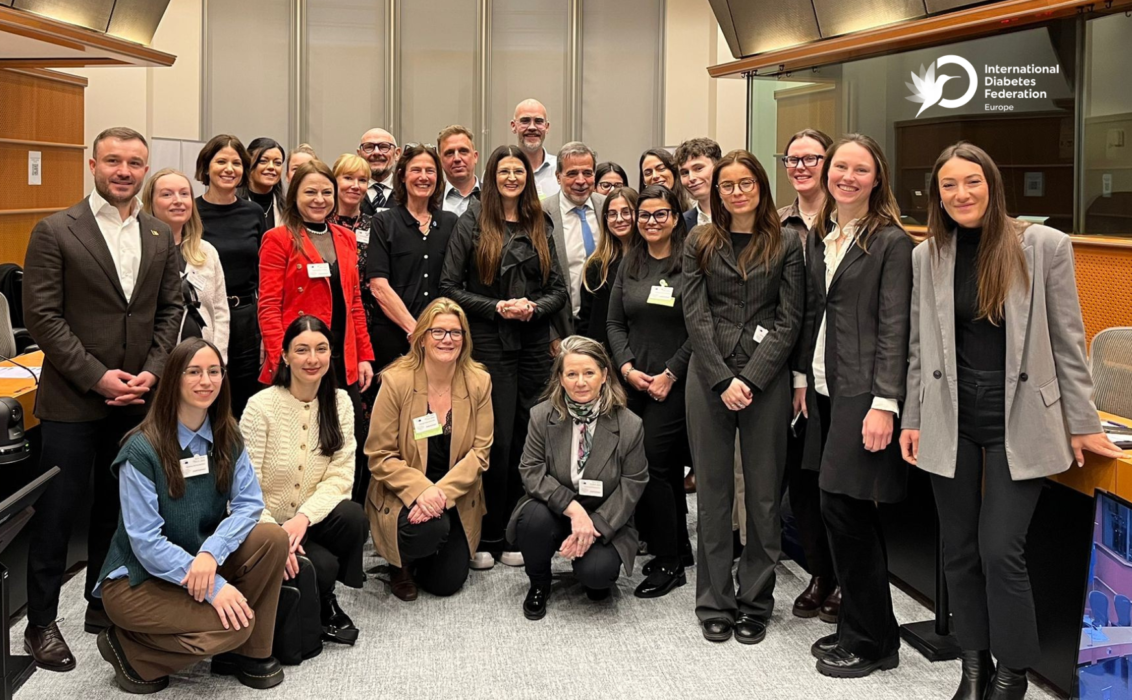
On January 29, we had the pleasure of organising an event at the European Parliament, hosted by MEP Romana Jerković, member of the MEPs Interest Group MEPs Mobilising for Diabetes (MMD), focused on addressing the growing burden of diabetes and obesity in Europe.
Moderated by IDF Europe Communications & Engagement Manager, Marian Brennan, the event brought together policymakers, healthcare professionals (HCPs), people with lived experience of type 2 diabetes (T2D) and obesity, and other experts to discuss the urgent need to tackle these conditions through prevention, early detection, timely treatment and equitable access to care — leaving no one behind.
In her opening remarks, MEP Jerković stressed the need to better align policy with the latest evidence and innovations in diabetes and obesity prevention and care. She called for both coordinated strategies on non-communicable diseases (NCDs) and dedicated, targeted approaches for diabetes and obesity. She also highlighted the importance of creating health-enabling environments, tackling commercial determinants of health, strengthening health literacy and empowering people to lead healthier lives: “Addressing the growing prevalence of obesity and diabetes requires the right political choices for the long term. Prevention, access to care and patient rights are not optional — they are essential. To make the EU stronger and more resilient, we need a healthier EU.”
Linda Kølleskov, T2D advocate and member of the IDF Europe T2gether group, shared a powerful testimonial on the burden of stigma related to diabetes and obesity, which compounds the challenges of living with multiple chronic conditions. She emphasised the importance of access to appropriate care and supportive environments in healthcare settings, workplaces and communities.
Prof. João Raposo, IDF Europe Chair-Elect, highlighted the heavy burden diabetes and obesity place on both individuals and health systems. He urged policymakers and stakeholders to be more ambitious and to leverage opportunities such as the ‘Safe Hearts Plan’ to address diabetes, obesity and their impact on cardiovascular disease (CVD) through improved prevention and care.
Early intervention for lifelong health: tackling childhood obesity and T2D
Prof. Carine De Beaufort highlighted key considerations in addressing childhood obesity and early-onset T2D. She stressed the importance of prevention and appropriate support from an early age and explained how children and adolescents differ from adults in terms of disease presentation, treatment, management and support needs. She also addressed the long-term challenges associated with early disease onset and its lifelong consequences.
Twin epidemics, shared solutions: towards person-centred and integrated care
Prof. Bart Van der Schueren provided an overview of the epidemiology and complex pathophysiology of obesity and T2D in Europe. He called for improved outcomes by preventing or delaying complications, extending healthy life expectancy and strengthening person-centred and integrated care models across health systems.
Panel discussion: prevention strategies, early intervention and integrated care pathways
During the first panel discussion, Natasja Wijling, ECPO Obesity Advocate, shared her experience of living with overweight and later receiving a T2D diagnosis after already facing other health issues. Her story raised important questions about the role of primary care in prevention, screening and early intervention, as well as the need for better communication and stigma-free interactions between HCP and people living with overweight, obesity and/or diabetes.
Christian Petersen, T2D advocate and member of the IDF Europe T2gether group, described being diagnosed with T2D at the age of 17. He emphasised how receiving person-centred care helped build trust with his healthcare providers and allowed treatment strategies to be adapted to his needs and preferences, supporting optimal self-management.
Maurizio Guidi, Co-Chair of the EFPIA Obesity Platform from Lilly, highlighted the persistent gap between evidence and clinical practice. He stressed the need to redesign health systems to enable earlier intervention with the right treatments to prevent irreversible complications.
Stigma in obesity and T2D: impacts on health outcomes and quality of life
Prof. Katarzyna Cyranka presented compelling insights into how stigma negatively affects health outcomes and quality of life for people living with T2D and obesity. She explained that people do not manage their condition in isolation, but within social contexts often full of expectations and moral judgments. When a condition is morally judged, it becomes part of one’s identity, not just a health issue to manage. However, she emphasised that stigma can be reduced and that policymakers, HCPs and society all have a role to play in creating more supportive environments.
Panel discussion: lived experience and policy strategies to improve access, address disparities and tackle stigma
During the final panel discussion, Diana Castillo, Obesity Advocate, delivered a powerful testimonial on the importance of receiving concrete, tailored support from healthcare professionals that goes beyond “eat less and move more.” People living with T2D and/or need stigma-free care, appropriate tools and long-term support to achieve optimal health outcomes.
Christina Holton Moloney, Novo Nordisk representative at EFPIA, noted that the ‘Safe Hearts Plan’ marks an important milestone by recognising the links between CVD, diabetes and obesity, and by including health checks. However, she stressed that policy commitments must be translated into routine care, supported by digital tools and better data collection.
Concluding remarks and calls to action
In the closing session, Prof. Raposo recapped the key messages from the event and outlined two key calls to action from IDF Europe:
- He called for strong consideration of T2D and obesity within the European Parliament’s own-initiative (INI) report on CVD, given their role as primary drivers of downstream cardiovascular and renal disease, and emphasised the need for prevention from an early age, access to innovation and person-centred, integrated care to prevent and delay complications.
- In the context of the new Multiannual Financial Framework (MFF) for the years 2028 to 2034, IDF Europe called for a strong, standalone health programme under the European Competitiveness Fund, essential to ensure continued support for the European Health Union and to address current and future health challenges in the EU.
MEP Jerković concluded the event by underlining the importance of listening directly to people with lived experience, as a way to ensure that policymaking remains focused on what truly matters – improving people’s lives.
We extend our sincere thanks to all speakers and participants who contributed to these insightful and impactful discussions. In particular, we thank MEP Romana Jerković for hosting the event and all Diabetes and Obesity Advocates who shared their lived experiences and powerful messages, reminding us why urgent action is needed.
This activity was conducted with the support of the EFPIA Obesity Platform
The full event report will be published soon.