Accurate blood glucose monitoring is essential for people living with diabetes (PwD). While traditional blood glucose meters were long the standard, the past decade has seen a rapid shift toward continuous glucose monitoring (CGM). CGMs measure glucose in the interstitial fluid and use advanced algorithms to approximate plasma-glucose levels. They provide continuous readings throught the day and overnight and can be connected with other devices such as insulin pumps and pens. CGMs have been shown to improve HbA1c, reduce hypoglycaemia and improve quality of life for PwD.
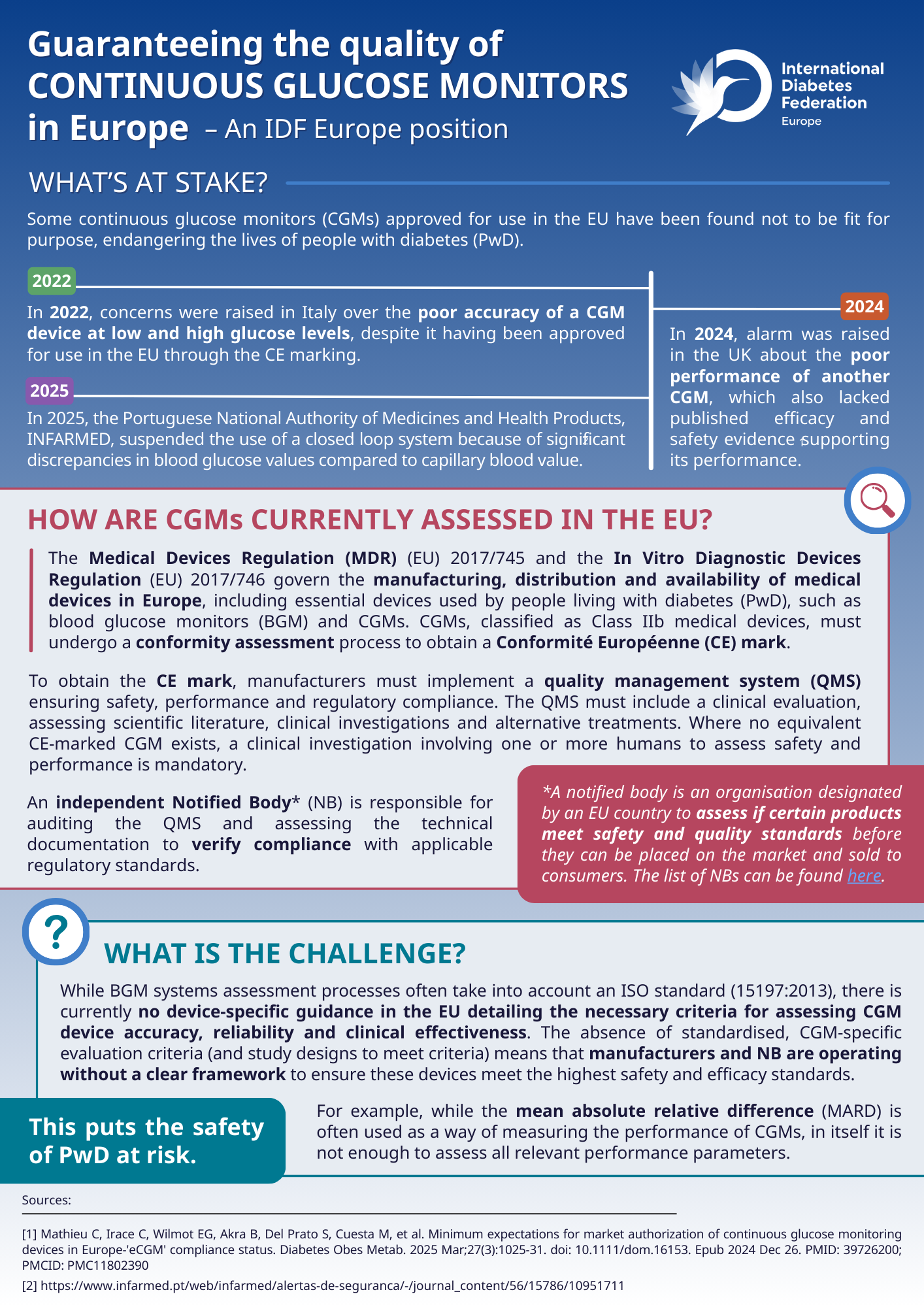
Because of these benefits and the key role CGMs now play in diabetes self-management, it is critical that they meet high accuracy and performance standards. Recently, some CE-marked CGMs have been found not to be fit for purpose, putting PwD at risk. Ensuring the CE-marking process is robust and capable of safeguarding people who rely on medical devices is therefore crucial. Yet, at EU level, no device-specific guidance currently defines the criteria for evaluating CGM accuracy, reliability and clinical effectiveness.
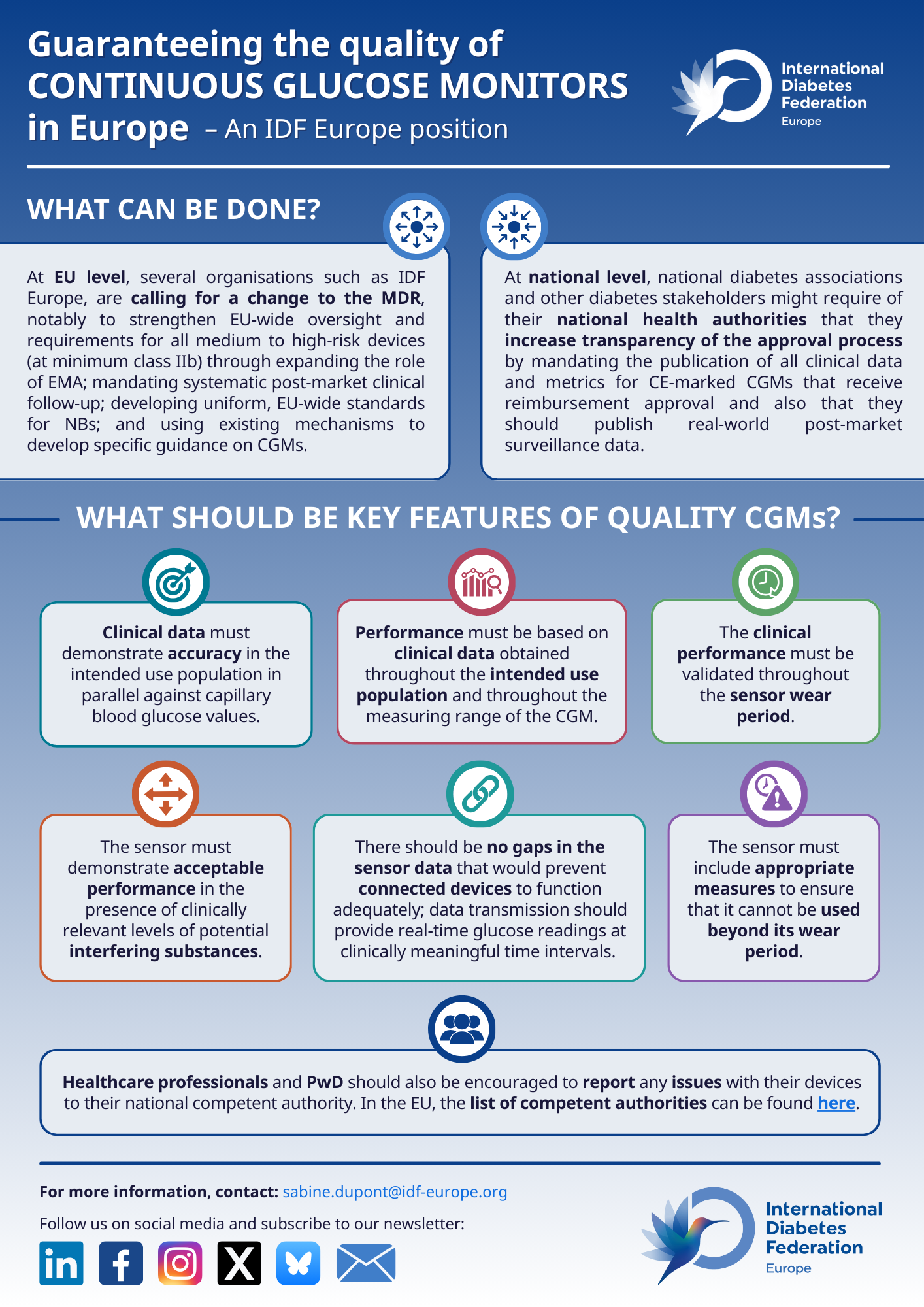
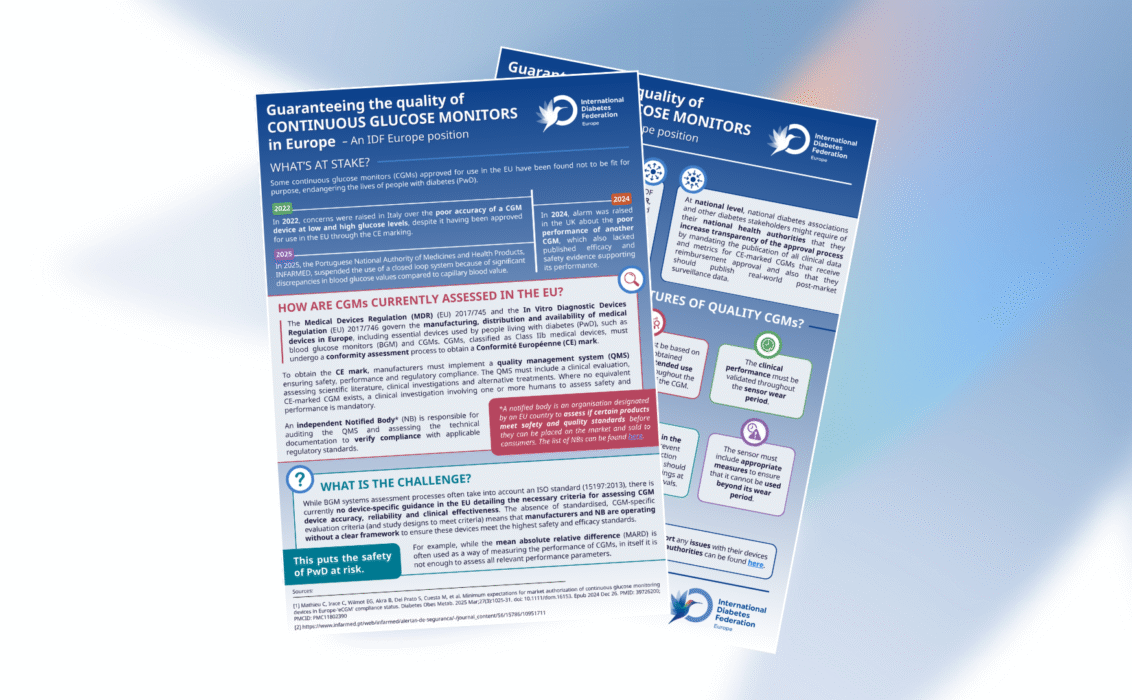
For this reason, IDF Europe has been calling for amendments to the Medical Devices Regulation (MDR) to strengthen oversight and establish EU-wide standards for CGMs, including through a response to the targeted revision of EU rules for Medical Devices and In Vitro Diagnostics. In parallel, IDF Europe has developed a two-page document for its member associations, outlining its position on the need to guaranteeing the quality of CGMs in Europe. The document supports national members by explaining how CGMs are currently assessed in the EU, outlining the main challenges, guiding them on how to report adverse events to national authorities and summarising the key features that high-quality CGMs should meet.