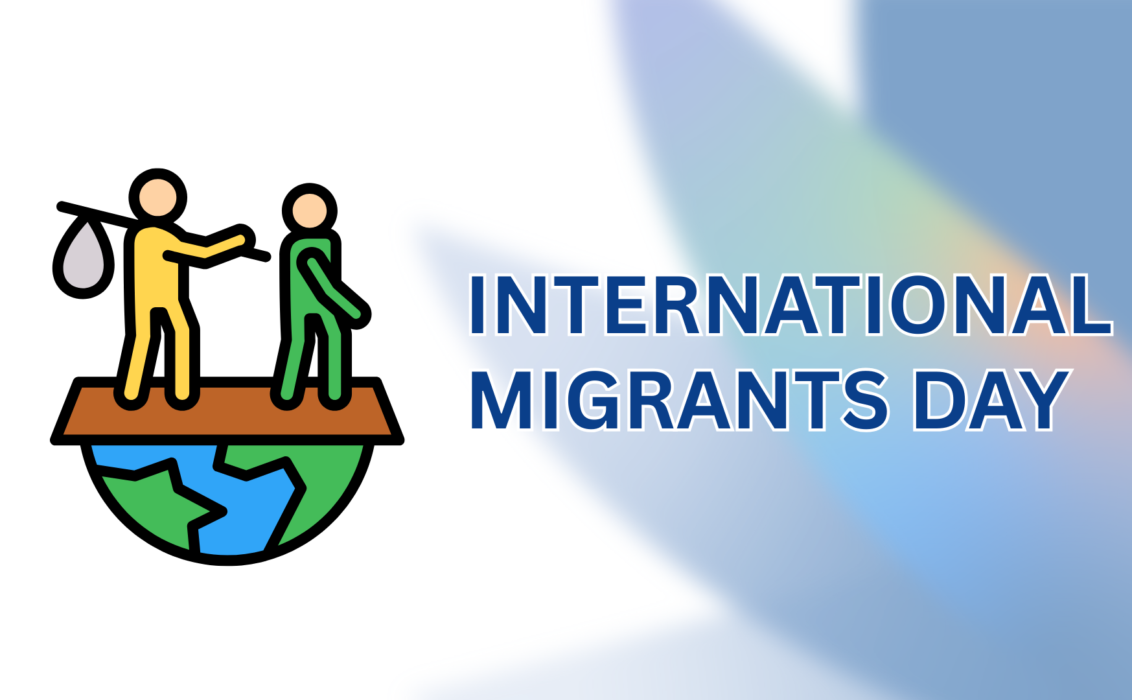
Each year on December 18, we mark International Migrants Day by highlighting the challenges and inequities faced by migrants and displaced people living with diabetes (PwD).
The double burden of disease for migrants
Non communicable Disease (NCDs) including diabetes, remain the leading cause of death globally, responsible for 74% of all mortality [1]. Migrants and displaced people face a double burden of disease: heightened exposure to the risk factors that drive NCDs, and persistent barriers to accessing prevention, early detection and quality care. These challenges arise both during the migration journey and after arrival in host countries.
Throughout the migratory process, people on the move are frequently exposed to conditions that increase their likelihood of developing NCDs. Food insecurity, chronic stress, environmental pollution, unsanitary living conditions and interrupted access to medicines create environments where the onset and progression of NCDs, including diabetes, become more likely [1, 2].
After arrival, migrants often continue to face systemic barriers shaped by social determinants of health. Poverty, insecure or informal employment, hazardous working and living conditions, inadequate housing, discrimination, limited health literacy, legal status, age and gender all influence whether migrants can access preventive services, screening, timely diagnosis and continuous care [1-2].
When these barriers persist, they contribute to poorer health outcomes and deepen vulnerabilities within migrant communities. Ensuring equitable access to essential NCD and diabetes services for migrants is therefore not only a health priority, it is an essential step toward fulfilling the right to health for all [2, 3].
Discrimination and its impact on migrants’ health
Discrimination plays a significant role in shaping migrants’ health outcomes. A 2025 study examining migrant health across several European countries found that discriminatory social and policy climates were strongly associated with higher numbers of migrants being unable to obtain medical examinations and treatments when needed [4].
Experiences of discrimination can profoundly influence migrants’ health-related attitudes and behaviours, often resulting in unmet health needs. Many migrants encounter hostile or unwelcoming environments in healthcare settings, where providers may fail to account for cultural differences or communication needs. This lack of culturally competent care reduces treatment quality, undermines therapeutic relationships and negatively affects overall health outcomes [4, 5].
Non-inclusive healthcare policies further exacerbate existing challenges. Language barriers, limited health literacy and unfamiliarity with health system structures can delay or prevent access to essential services. Preventing these hostile healthcare environments requires strategies that address structural and social factors perpetuating discrimination, including culturally responsive care, language and navigation support and promotion of equity and inclusion in all aspects of healthcare delivery [4, 5].
The current landscape: NCD risk and global commitments
Amid increasing geopolitical instability and humanitarian crises, safeguarding the health and rights of migrants and refugees has become more urgent than ever. In 2025, several meetings addressed growing migration patterns and the insufficient support provided to people on the move, particularly in relation to NCDs:
- In May of 2025, at the World Health Assembly (WHA78), the event “Global health equity: a shared responsibility in addressing the NCD burden for all, including migrants and refugees”—co-organised by the Arab Republic of Egypt, the Republic of Peru, WHO and IOM—called for stronger, inclusive and responsive health systems that ensure migrants have access to essential NCD services [1].
- In September 2025, during the 80th United Nations General Assembly, Member States, UN agencies, civil society and partners came together to emphasise the need to include migrants and refugees in national and global strategies for NCDs and mental health [5]. This meeting underscored the need for bold political commitment and cross-border cooperation to ensure migrants are not left out of critical NCD planning and implementation efforts.
These global discussions make clear that advancing NCD care and mental health support for migrants is not only a matter of public health, it is a matter of equity, human rights and social justice.
Global health leaders have also repeatedly emphasised the fact that including migrants in national NCD and universal health coverage (UHC) strategies is essential to meet global targets. Key recommendations include integrating migrants into national NCD and mental health policies, ensuring continuity of care across borders, developing culturally sensitive, people-centred models and embedding the “leave no one behind” principle [1, 5].
Despite global commitments, many countries continue to overlook migrants in NCD and diabetes strategies. Restrictive migration policies, such as fast-track returns and tightened asylum procedures, further interrupt care and limit access to medicines, compounding health inequities.
Addressing these challenges requires integrated, human rights–based approaches that combine diabetes and NCD management with nutrition, social protection, culturally appropriate services and community engagement [1, 5]. Training healthcare workers in culturally responsive care and strengthening continuity across the migration journey are critical. Without these measures, migrants and displaced people will continue to face gaps in prevention, early detection, and long-term management, undermining both health equity and global NCD targets [1–5].
On International Migrants Day 2025, IDF Europe underscores that migrants and displaced people should not face barriers to accessing diabetes and NCD care. They must be able to access health services across the full continuum of care, including prevention, screening, early diagnosis and ongoing treatment. Addressing the systemic barriers that continue to limit access is essential to reducing avoidable health inequalities. Ensuring equitable access to essential diabetes and NCD services for migrants is a necessary step toward healthier individuals, stronger health systems and truly inclusive care.
Sources:
- WHO. No health without inclusion—leaders call for equitable action on noncommunicable diseases for migrants and refugees at WHA78. Geneva: World Health Organization; 2025 May 20. Available from: https://www.who.int/news/item/20-05-2025-no-health-without-inclusion–leaders-call-for-equitable-action-on-noncommunicable-diseases-for-migrants-and-refugees-at-wha78
- Kehlenbrink S, Jaacks LM, Perone SA, Ansbro É, Ashbourne E, Atkinson C, et al. Diabetes in humanitarian crises: the Boston Declaration. Lancet Diabetes Endocrinol. 2019;7(8):590–2.
- Agyemang C, van den Born BJ. Non-communicable diseases in migrants: an expert review. J Travel Med. 2019;26(2):tay107.
- Aljadeeah, S., Sy, H., Michielsen, J. et al. Access to medicines and continuity of non-communicable diseases care for forcibly displaced populations: a call for rights-based, comprehensive responses. BMC Glob. Public Health 3, 49 (2025). https://doi.org/10.1186/s44263-025-00172-8
- WHO. Leaving no one behind—a call to advance noncommunicable diseases and mental health equity for migrants and refugees at UNGA80. Geneva: World Health Organization; 2025 Sep 25. Available from: https://www.who.int/news/item/25-09-2025-leaving-no-one-behind–a-call-to-advance-noncommunicable-diseases-and-mental-health-equity-for-migrants-and-refugees-at-unga80