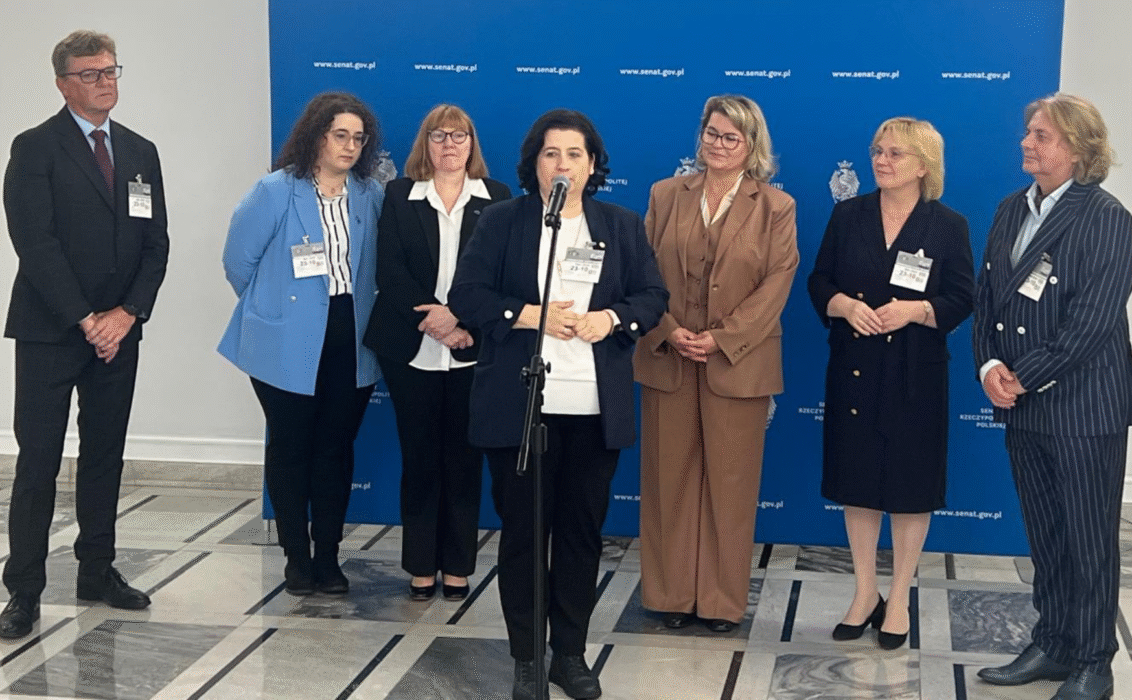
On October 23, 2025, IDF Europe took part in the Polish Senate Health Committee meeting in Warsaw on access to continuous glucose monitoring (CGM) systems for people living with diabetes (PwD).
The meeting, chaired by Dr Agnieszka Gorgoń-Komor, Senator and Chairwoman of the Parliamentary Team for Scientific Research and Innovation in Healthcare, brought together national experts, policymakers, national diabetes associations and diabetes advocates to discuss how to improve access to diabetes technologies in Poland.
Equitable access to CGMs
Prof. Leszek Czupryniak, Head of the Department of Diabetology and Internal Medicine at the Warsaw Medical University, Board Member of both Polskie Towarzystwo Diabetologiczne and IDF Europe, underlined the urgent need to expand equitable access to CGM systems for all PwD. He also emphasised the importance of identifying and securing the necessary funding to achieve this goal.
Monika Kaczmarek, President of the Polskie Stowarzyszenie Diabetykow, discussed access to diabetes technologies and ways to improve outcomes for PwD. She also presented the results of a survey on patient experiences and expectations regarding diabetes technology.
Other experts in diabetology, cardiology, paediatrics and obstetrics and members/representatives of national diabetes patient and medical associations also explored the importance of diversity and equity in access to glucose monitoring systems.
The European and international contexts
Sabine Dupont, IDF Europe’s Director, Strategy & Policy, presented the international perspective on access to CGMs. She highlighted that ensuring equitable access to modern diabetes technologies not only improves clinical outcomes and quality of life but also empowers PwD to make informed care decisions, lowers the risk of complications and delivers long-term cost savings for healthcare systems.
Next steps for diabetes care in Poland
The meeting concluded with a discussion on the need to ensure t all devices on the market are of good quality and safe for use by the people who need them. Senator Agnieszka Gorgoń-Komor also mentioned her intention to convey the meeting’s conclusions to the Minister for Health and in particular to focus on the need to reimburse insulin pumps for people over the age of 26; ensure that all people on insulin have access to CGMs and further explore the notion of time in range.
IDF Europe was pleased to take part in this important dialogue alongside members and representatives from its Polish Member Associations, T2GETHER advocate, Oliwia Kaczmarek, and other national organisations representing PwD.
Together, the participants reaffirmed their shared commitment to advancing equitable, innovative and person-centred diabetes care, ensuring that all PwD in Poland can benefit from the latest technological advancements.
Spotlight on the Polskie Stowarzyszenie Diabetykow
With 55,000 members, the Polish Diabetes Association plays a leading role in advocating for improved diabetes care and awareness in Poland. In recent years, the Association has contributed to key policy advances, including the reimbursement of CGMs and insulin pen needles and modern treatments for diabetes-related macular oedema.
The Association has also launched initiatives on diabetes-friendly workplaces, promoting supportive environments that enable employees living with diabetes to thrive. Through educational materials, campaigns and partnerships, the organisation continues to raise awareness of new treatment options and healthy lifestyles.
In 2026, the Association will celebrate its 45th anniversary and 35 years as an IDF Europe member, marking the occasion with events designed to engage PwD and continue dialogues with policymakers to further improve diabetes care in Poland.
Spotlight on the Polskie Towarzystwo Diabetologiczne
As the leading scientific body for diabetes care in Poland, the Polskie Towarzystwo Diabetologiczne unites healthcare professionals and researchers committed to advancing diabetes prevention, diagnosis and treatment. The Association plays a central role in shaping national clinical practice through its evidence-based guidelines, which are regularly updated and widely recognised as the standard of care in the country.
The Association drives professional development by organising annual congresses, training programmes and other medical education initiatives. It also supports research aimed at improving outcomes and reducing the burden of diabetes-related complications, fostering collaboration across disciplines and with international partners.
The Association contributes expert insights to policymakers to help shape effective diabetes strategies and care pathways in Poland.