The International Diabetes Federation (IDF) is deeply concerned about the situation in Iran and countries across the Middle East following the escalation of tensions in the region that started in February 2026.
Our thoughts are with all those affected by the current crisis. We are working closely with our Members in the Region and partners to better understand how the situation is affecting people living with diabetes.
Conflicts and humanitarian crises can severely disrupt access to insulin and other medicines, blood glucose monitoring supplies, electricity for refrigeration, and functioning health facilities. For people living with diabetes, who require reliable access to medicines and monitoring supplies, such disruptions can have serious consequences. For people living with type 1 diabetes, who depend on a continuous supply of insulin to survive, interruptions in access to care can rapidly become life-threatening.
The IDF Diabetes Atlas estimates that over 35 million people are living with diabetes in the countries affected, including over 900,000 with type 1 diabetes. In Iran alone, an estimated 5.5 million people are living with diabetes, including 135,000 people with type 1 diabetes. Local estimates suggest the total number may be as high as 8 million.
Access to healthcare is a fundamental human right. This includes access to essential medical information, digital health tools and telemedicine services. Many people living with diabetes rely on connected technologies such as digital monitoring platforms and continuous glucose monitoring systems, to manage their condition. Restrictions that limit access to the internet can therefore directly disrupt diabetes care and self-management.
Considering these risks, urgent action is required to safeguard access to diabetes care during this crisis.
The International Diabetes Federation urges all parties and relevant authorities in affected countries to take immediate steps to:
- Ensure that any sanctions, restrictions and other measures do not impede access to essential healthcare services.
- Guarantee safe and uninterrupted access to insulin, glucose-lowering medicines, blood glucose monitoring supplies and other essential diabetes care.
- Ensure healthcare facilities remain accessible and able to provide diabetes care during the crisis.
- Maintain reliable electricity supply and distribution chains necessary for the storage and delivery of insulin and other medicines.
- Protect access to the internet and digital communication channels that enable telemedicine and remote diabetes management.
Protecting the health and dignity of people living with diabetes and other chronic conditions during times of crisis must remain a priority for all governments and authorities. It is both a humanitarian obligation and a public health imperative.
We will continue to monitor this rapidly evolving situation closely through our Members and contacts on the ground. We will update this statement as needed.
Prof Peter Schwarz
President, International Diabetes Federation
Prof Mohamed Eltom
Chair, IDF Middle-East and North Africa Region
Testimonials from people living with diabetes about their experience during this conflict
Living with diabetes in Iran has never been an easy matter, but everything has become harder since 28 February. The days we hope become memories and we call them “the days we remained sweet and strong.”
The psychological pressure of being in a war, the fear of losing our fellow citizens, and the shortages of food and medicine are our primary terrors. We, people with diabetes in Iran, live in dread of returning to insulin syringes due to the halt in the import of insulin pens. Many of us, driven by stress, have forgotten the fundamental principles of diabetes management, although the “Diabetes and Crisis” classes organised by the Gabric diabetes association have helped mitigate this to a great extent. Establishing these classes was a challenge in itself for Gabric’s volunteers and organisers, given the communication constraints in Iran. For many of us, it wasn’t just the sound of explosions that terrified us; it was the thought with every blast: “Where are my insulin and my glucometer right now?”
Being a person with diabetes in the midst of war has taught us to exert greater control over our emotions, to be more patient, and to endure life even through the pain. War is an opportunity for us to truly understand those around us, to realise how much we love our homeland, and even to learn how to be a source of peace for others, even when we ourselves are under immense pressure.
We are incredibly resilient. Perhaps few people realise that managing diabetes alongside a war is like carrying a burden even heavier than before, facing anxieties far beyond those of others. Mothers of children with diabetes have learned to be strong, to not fear, to not cry, and to keep an even closer eye on their children. In the midst of fear and despair, when we are most likely to neglect ourselves, diabetes reminds us to: ‘Get up, keep going, and be strong.’
As the New Year began in Iran, we, people with diabetes, made another wish that:
“Diabetes would never again be a source of stress for any family, and that peace and a good life return to Iran”
To us, “war and challenges” is a familiar term. The war we face today, and the world outside, is somewhat similar to our years-long battle for access to modern, insured medicine and equipment. Now, in the midst of conflict, we have learned to fight for our yesterday, our today, and our tomorrow; fighting for a better life with diabetes in Iran.
With all our wounds, we will persevere, we will continue to learn, and we will build a sweet future.
Living with type 1 diabetes in Lebanon during this crisis has been an overwhelming burden. It’s not just about managing blood glucose anymore, it’s about constantly living with the fear of every possible scenario, even death. That fear is always in the back of your mind: what if something happens and I can’t access insulin? What if I can’t reach a hospital? What if I’m alone? Before everything escalated, my life was structured and purposeful. As a university student, I had a routine. I would wake up, grab a coffee, and start my day working on diabetes-related projects, something I am deeply committed to and see as my mission. Alongside that, I balanced my academic responsibilities, preparing papers and assignments, and trying to build a future for myself. Despite the challenges of living with T1D, there was a sense of direction, stability, and hope.
But everything changed in an instant. When the first shots were fired, my brother and I had to flee our apartment in the city and return to our village. Our lives stopped suddenly, without warning. Everything we had built – our routines, our plans, our sense of normalcy – was put on hold. Living with diabetes in such conditions adds another layer of stress that is hard to describe. Access to medication, proper nutrition, and even basic stability becomes uncertain. What makes it even harder is the emotional toll. Many of my closest friends, the people I shared my daily life with, have left the country. You find yourself feeling isolated, disconnected, and left behind in a place that no longer feels the same. The support system you once relied on is no longer physically there. The mental health impact is real and heavy. Anxiety, fear, and constant overthinking become part of your daily life.
You’re not just managing diabetes anymore, you’re managing survival, uncertainty and grief all at once. Living with T1D in Lebanon today means carrying both a physical and emotional burden. It’s about resilience, but it’s also about exhaustion. And it’s important for people to understand that behind every person with diabetes in a crisis, there’s a story like this one of fear, disruption, and the struggle to keep going despite everything.
In times of crisis, managing diabetes becomes more than a daily routine. It turns into a constant, exhausting balancing act shaped by stress, uncertainty, and the need for relentless vigilance, especially while working on the front lines as an emergency medical technician. It’s not just about the external challenges, but also the constant need to monitor blood glucose levels, adjust routines, and stay in control when everything around feels unpredictable.
The emotional and physical toll can build up quickly, making even simple daily tasks feel overwhelming. Living with diabetes in such conditions requires extra patience, awareness, and resilience. It’s a continuous balancing act between taking care of your health and navigating everything else happening around you. Sharing this experience matters, because it sheds light on the invisible challenges many people face and reminds others that they’re not alone.
Living with type 1 diabetes is already a constant responsibility. During times of crisis, it becomes even more challenging. During the current instability in Lebanon, managing my condition has no longer been just about routine, it has been about adapting to uncertainty. Access to insulin, proper storage, regular monitoring, and maintaining stability become daily concerns. At the same time, stress and fear have directly impacted my blood glucose levels, making them harder to control despite my efforts. The experience has shown me that diabetes does not pause during crises, it requires constant care, even when everything else is unstable. I am deeply grateful to Chronic Care Center for their unwavering support and for never stopping their care for people living with diabetes, no matter the circumstances. By sharing my story, I hope to highlight the urgent need to include people living with diabetes in emergency response plans. Access to medication, care, and support is not a luxury, it is essential.
Resources to support people with diabetes in disaster situations
Guideline
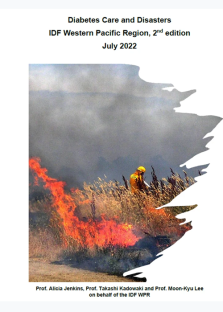
IDF WPR Diabetes Care and Disasters Manual 2nd Edition 2022
This manual identifies means to reduce the negative impact of natural disasters and promotes the sharing of knowledge to increase community resilience to natural disasters. The second edition includes substantial updates informed by recent disaster experience learnings. Also available in Urdu.
link to https://idf.app.box.com/s/pno1bkxgb9814w1hqkumvcg6q4vbxj2i
Download
Guideline
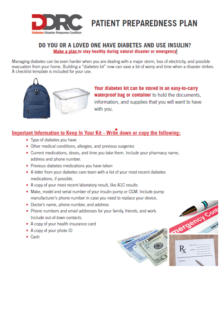
DDRC Patient Preparedness Plan
A guide developed by the Diabetes Disaster Response Coalition to help people living with diabetes to stay healthy during natural disaster or emergency.
DDRC preparedness plan
pdf
926KB
Guideline
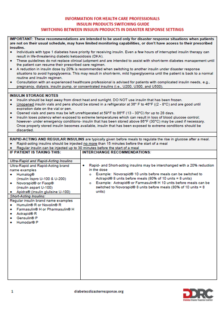
DDRC Insulin Products Switching Guide
Recommendations for healthcare professionals developed by the Diabetes Disaster Response Council to support people with diabetes in switching between insulin products in disaster response settings. Also available in Arabic and Spanish.
DDRC Insulin product Switching Guide
pdf
152KB
Article
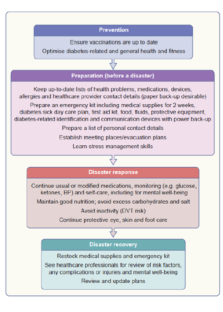
Disaster-related actions for people with diabetes and their families
Article published in Diabetologia that provides an overview of disaster-related actions recommended for people with diabetes and their families according to the prevention, preparation, response and recovery approach.
Disaster related actions
pdf
450KB
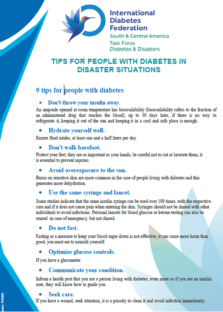
Guideline
Tips for people with diabetes in disaster situations
Guidelines developed by the IDF South and Central America (SACA) Region to support people living with diabetes in disaster situations. Also available in Portuguese and Spanish.
SACA disaster tips for people with diabetes-EN
pdf
3MB
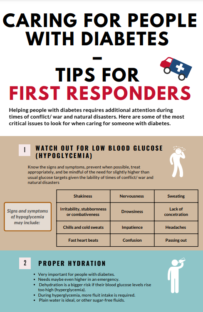
Guideline
Tips for first responders caring for people with diabetes
Guideline developed by International Alliance for Diabetes Action and Diabetes Education for All. Also available in Arabic
Tips to First Responders - EN
pdf
150KB
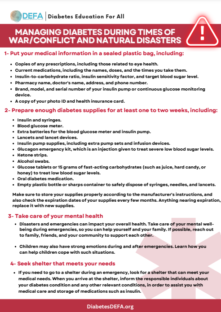
Guideline
Diabetes Emergency Kit (actions and supplies)
Guide developed by Diabetes Education For All. Also available in Arabic
Diabetes Emergency Kit (Important Info + Supplies) - EN
pdf
383KB
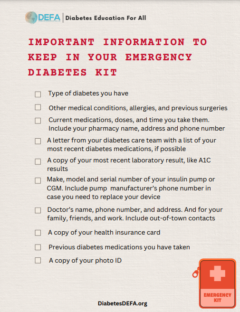
Guideline
Diabetes Emergency Kit - Important Information List
Guide developed by Diabetes Educational for All. Also available in Arabic
Diabetes Kit- Imp Information - EN
pdf
2MB
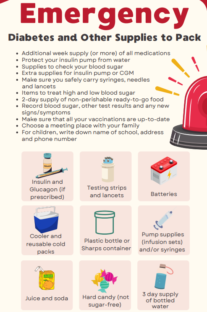
Infographic
Emergency Diabetes Supplies List
Infographic developed by Diabetes Education for All. Also available in Arabic
Emergency Diabetes Supplies to Pack - EN
pdf
2MB
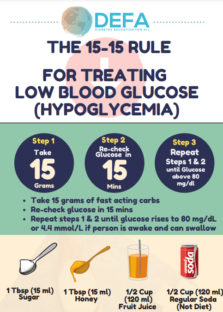
Guideline
The 15-15 rule for treating low blood glucose
Guideline developed by Diabetes Education For All. Also available in Arabic
The 15-15 rule for treating low blood glucose - EN
pdf
2MB
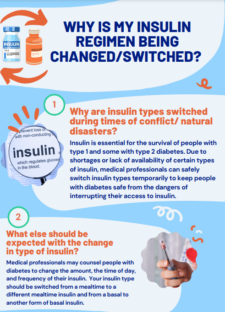
Guideline
Insulin Switching Patient Guide
Guide developed by International Alliance for Diabetes Action and Diabetes Education for All. Also available in Arabic
Insulin Switching Infographic for Patients - EN
pdf
1MB
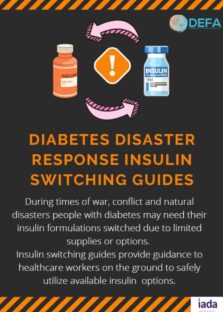
Leaflet
What is an insulin switching guide?
One pager developed by the International Alliance for Diabetes Action and Diabetes Education for All. Also available in Arabic
What is an insulin switching guide - EN
pdf
138KB