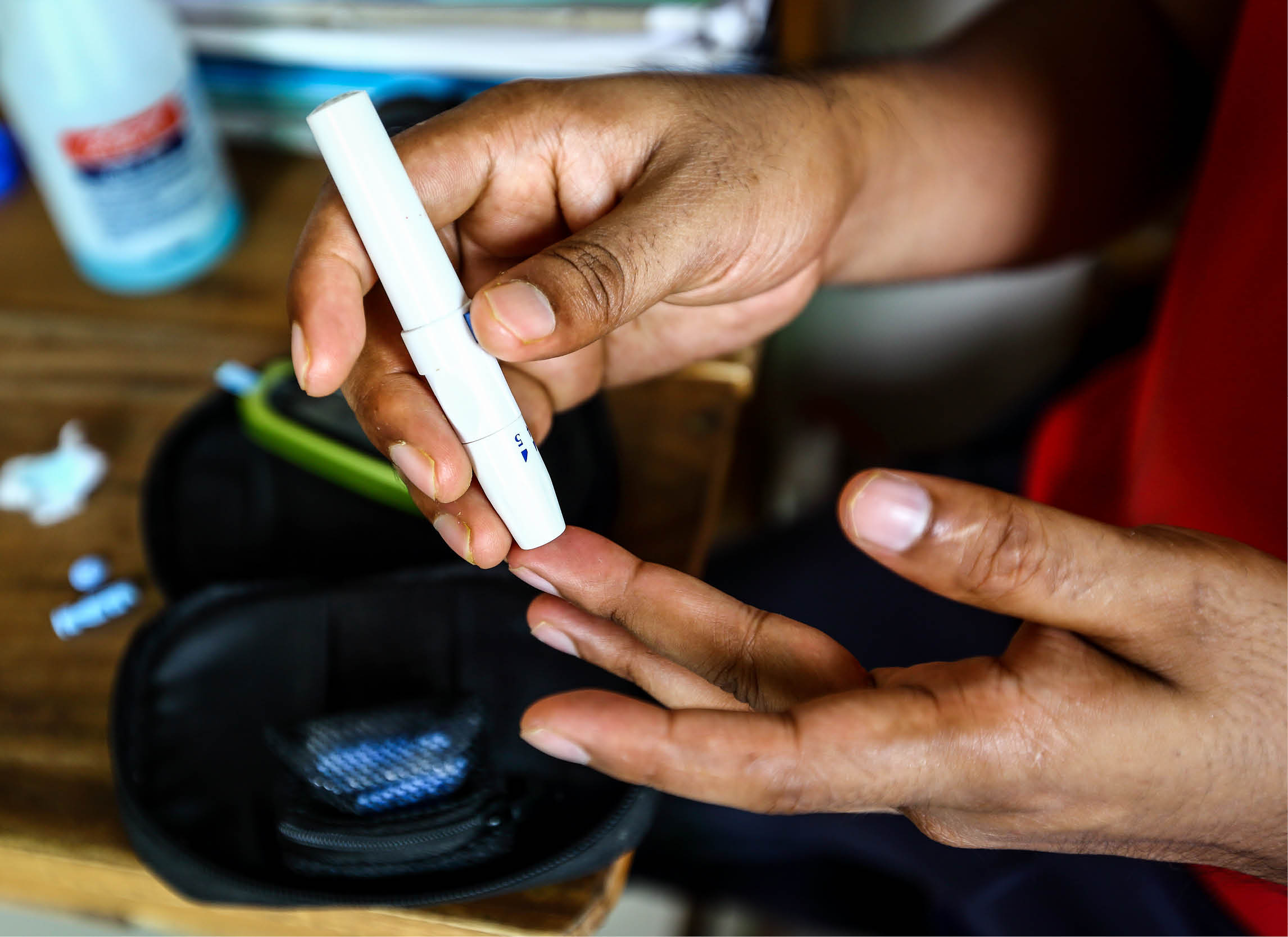
Type 2 diabetes can in many cases be delayed or prevented. There are several steps that can be taken to reduce the risk. Type 1 diabetes cannot be prevented, but research is ongoing to determine its triggers and help delay the onset of the condition.
Type 2 diabetes is a condition where the body cannot properly control blood glucose levels. The causes are complex. Modifiable risk factors include excess weight, unhealthy nutrition, and a lack of physical activity.
Strong evidence from international studies shows that maintaining a healthy weight and staying physically active can significantly reduce the risk of type 2 diabetes, especially in high-risk groups.
Regular health screenings provide an additional layer of protection. For those at higher risk, routine check-ups can detect early warning signs, allowing people to take action sooner and delay or prevent the condition.
The following steps can help reduce the risk of developing type 2 diabetes and support long-term well–being.

Tips for a healthy diet:
- Choose water, coffee or tea instead of fruit juice, soda, or other sugar-sweetened beverages
- Eat at least three servings of vegetables every day, including green leafy vegetables
- Eat up to three servings of fresh fruit every day
- Choose nuts, a piece of fresh fruit, or unsweetened yoghurt for a snack
- Limit alcohol intake to a maximum of two standard drinks per day
- Choose lean cuts of white meat, poultry or seafood instead of red or processed meat
- Choose peanut butter instead of chocolate spread or jam.
- Choose whole-grain bread, rice, or pasta instead of white bread, rice, or pasta.
- Choose unsaturated fats (olive oil, canola oil, corn oil, or sunflower oil) instead of saturated fats (butter, ghee, animal fat, coconut oil or palm oil.
How physical activity helps delay or prevent type 2 diabetes
Regular physical activity plays a key role in reducing the risk of type 2 diabetes by improving how the body uses insulin and helping maintain a healthy weight. The goal is consistency rather than intensity.
The International Diabetes Federation recommends physical activity at least 3 to 5 days a week for a minimum of 30-45 minutes.
Recommended activity levels
Aim for at least 150 minutes of moderate-intensity activity per week. This can be spread across three to five days, with sessions lasting 30 to 45 minutes. Activities such as brisk walking, cycling, swimming, or dancing are all effective options.
Include strength training
In addition to aerobic exercise, incorporate strength or resistance training at least two days per week. This can include bodyweight exercises, resistance bands or weightlifting. Building muscle helps your body use glucose more efficiently.
Reduce sedentary time
Sitting for too long can increase the risk of diabetes. Try to break up sitting time every 30–60 minutes with light movement, such as standing, stretching, or short walks.
Start small and stay consistent
If you are new to exercise, begin with shorter sessions and gradually increase duration and intensity. Even modest increases in activity can make a meaningful difference over time.
Make it sustainable
Choose activities you enjoy, as this increases the likelihood of staying active long term. Consistency is the most important factor in reducing the risk of type 2 diabetes.
Diabetes prevention resources
Policy brief
Obesity and Type 2 Diabetes: a Joint Approach to Halt the Rise
A policy brief by IDF and World Obesity Federation that provides diabetes and obesity advocates, healthcare professionals and policymakers with recommendations on the actions required to prevent, manage and treat both conditions effectively.
Obesity and Type 2 Diabetes Policy Brief
pdf
2MB

Guideline
KiDS well-being guide
Awareness and information tool, developed by the Kids and Diabetes in Schools (KiDS) programme, for teachers, parents and students on the importance of nutrition and a healthy and balanced lifestyle in the management and prevention of diabetes.
link to https://kids.idf.org/education-resources/kids-well-being-guide/
Download

Report
Cost-effective solutions for the prevention of type 2 diabetes
Published in 2016, this report provides an overview of the programmes available to tackle the rise of type 2 diabetes. The wide range of options presented and their cost-saving implications give cause for optimism that the current situation can be reversed.
Cost-effective solutions for the prevention of T2D
pdf
15MB
Position statement
Prevention of obesity and type 2 diabetes in the school environment
Type 2 diabetes accounts for around 90% of all diabetes and is increasingly prevalent in children and adolescents. This IDF position statement focuses primarily on the role that education systems and school environments should play in the prevention of childhood obesity and type 2 diabetes.
Prevention of T2D in school environment
pdf
813KB