People with diabetes require uninterrupted access to treatment and care, healthy food, safe environments for physical activity, and information and guidance on managing their diabetes to prevent complications.
Even in the best of times, the condition can cause unnecessary hardship and overwhelm healthcare systems. Managing diabetes becomes more complicated when resources are scarce or in times of emergency.
In addition to spearheading essential diabetes awareness, advocacy and education initiatives, IDF engages in humanitarian activities to tackle the challenges of living with diabetes during a natural or human-made disaster.
Challenges
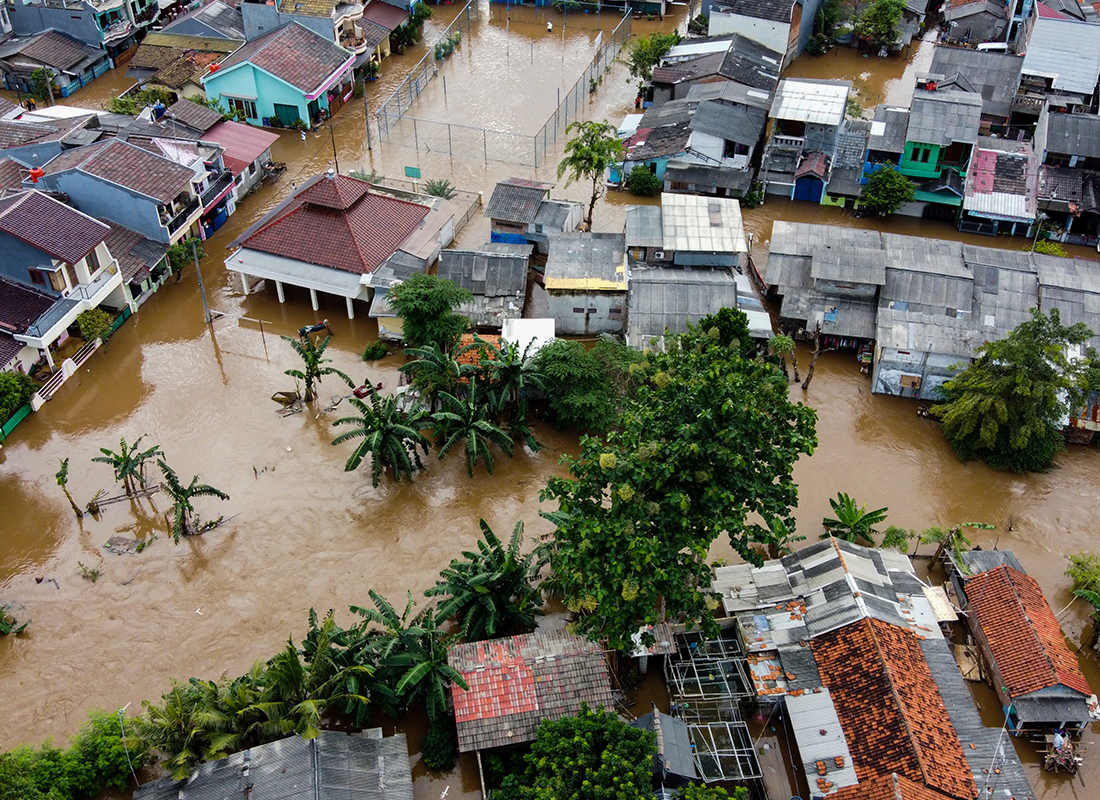
Depending on the emergency, the diabetes challenges vary. Several factors contribute to the disaster response and support delivered to people with diabetes. These include:
- Type, size and nature of the affected area
- Duration of the disaster
- Local population’s experience with such disasters
- Local infrastructure and socioeconomic situation
- Preparedness plans
- Size of assistance provided on local, regional and global levels
Latest IDF humanitarian activity news
WHA79: The Value Collection
An immersive exhibition exploring the value of flexible, person-centred primary health care through lived experiences, real stories and community voices.
Discover the storiesSupport our activities by making a donation
Donate to IDFLiving with diabetes during a crisis means carrying both a physical and emotional burden. It’s about resilience, but it’s also about exhaustion. And it’s important for people to understand that behind every person with diabetes in a crisis, there’s a story of fear, disruption, and the struggle to keep going despite everything. (Pedro, living with type 1 diabetes, Lebanon)
Sudden onset disasters
Sudden natural or human-made disasters disrupt people’s lives and healthcare systems. These situations pose unique challenges to people with chronic conditions such as diabetes, who may be unable to access the required medicine and supplies in sufficient quantity.
- medicine shortages or difficulties in reaching distribution points
- loss of prescriptions and medical records
- damage to medical facilities
- lack of diabetes training among emergency healthcare personnel
Disruption and poor health outcomes
Emergencies can lead to disruption in food, water, and utilities, leaving people with inadequate food options and limited cooking abilities. This can lead to poor health outcomes such as increased blood pressure and poor glycaemic control. In addition, diet and exercise regimens can be affected for months after a disaster, and mental health issues can arise post-disaster.
Resources for people with diabetes in disaster situations
Guideline
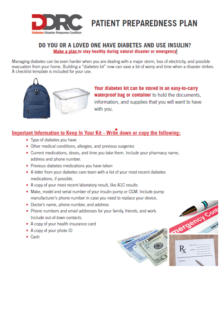
DDRC Patient Preparedness Plan
A guide developed by the Diabetes Disaster Response Coalition to help people living with diabetes to stay healthy during natural disaster or emergency.
DDRC preparedness plan
pdf
926KB
Guideline
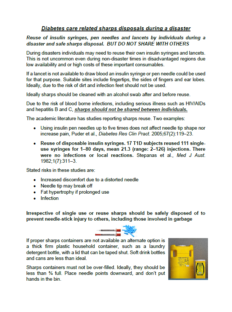
Diabetes care related sharps disposals during a disaster
Guideline on reusing and disposing of insulin syringes, pen needles and lancets by individuals during a disaster.
Diabetes care related sharps disposals during a disaster ENGLISH
pdf
717KB
Guideline
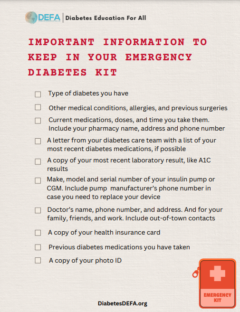
Diabetes Emergency Kit - Important Information List
Guide developed by Diabetes Educational for All. Also available in Arabic
Diabetes Kit- Imp Information - EN
pdf
2MB
Guideline
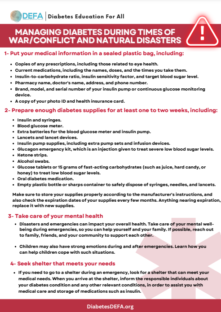
Diabetes Emergency Kit (actions and supplies)
Guide developed by Diabetes Education For All. Also available in Arabic
Diabetes Emergency Kit (Important Info + Supplies) - EN
pdf
383KB
Article
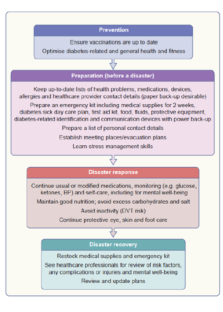
Disaster-related actions for people with diabetes and their families
Article published in Diabetologia that provides an overview of disaster-related actions recommended for people with diabetes and their families according to the prevention, preparation, response and recovery approach.
Disaster related actions
pdf
450KB
Infographic
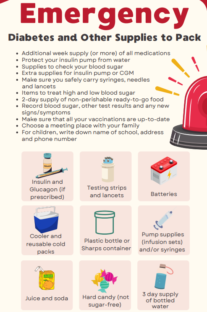
Emergency Diabetes Supplies List
Infographic developed by Diabetes Education for All. Also available in Arabic
Emergency Diabetes Supplies to Pack - EN
pdf
2MB
Guideline
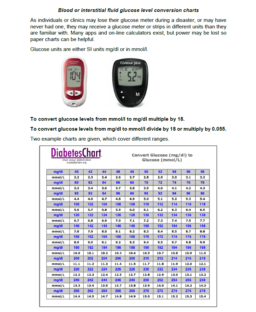
Glucose level conversion charts
Guidelines to support people who may lose their glucose meter during a disaster, or may have never had one, they may receive a glucose meter or strips in different units than they are familiar with. Also available in Spanish.
glucose conversion charts
pdf
479KB
Guideline
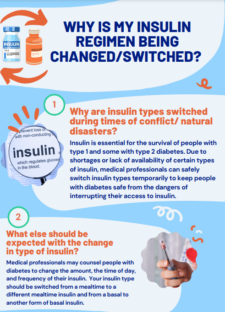
Insulin Switching Patient Guide
Guide developed by International Alliance for Diabetes Action and Diabetes Education for All. Also available in Arabic
Insulin Switching Infographic for Patients - EN
pdf
1MB
Article
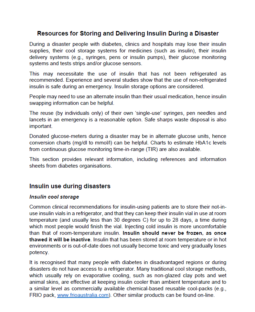
Storing and delivering insulin during a disaster
This document provides relevant information, including references and information sheets from diabetes organisations on storing and delivering insulin. Also available in Spanish. Translation provided by Dr Claudia Pieper.
Storing and Delivering Insulin During a Disaster
pdf
550KB
Guideline
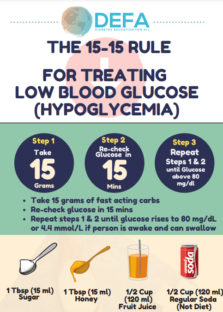
The 15-15 rule for treating low blood glucose
Guideline developed by Diabetes Education For All. Also available in Arabic
The 15-15 rule for treating low blood glucose - EN
pdf
2MB
Guideline
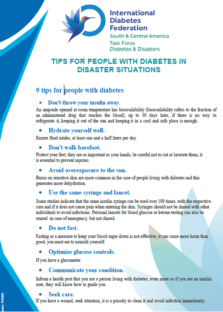
Tips for people with diabetes in disaster situations
Guidelines developed by the IDF South and Central America (SACA) Region to support people living with diabetes in disaster situations. Also available in Portuguese and Spanish.
SACA disaster tips for people with diabetes-EN
pdf
3MB

Guideline
Water purification and rehydration solutions
How to purify water, make rehydration solutions and sanitisers from low cost ingredients. Also available in Spanish.
Home made water purification and rehydration solutions and hand and surface sanitisers
pdf
339KB
Leaflet
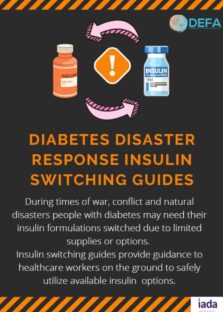
What is an insulin switching guide?
One pager developed by the International Alliance for Diabetes Action and Diabetes Education for All. Also available in Arabic
What is an insulin switching guide - EN
pdf
138KB
Resources for healthcare professionals in disaster situations
Guideline
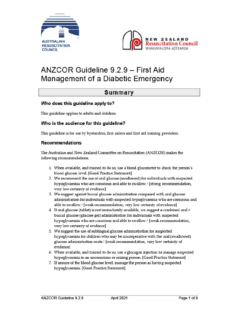
ANZCOR Guideline 9.2.9 First aid management of a diabetes emergency
Resource produced by the Australia and New Zealand Committee on Resuscitation. Also available in Spanish. Translation provided by Dr Claudia Pieper.
Diabetes First Responder information ENGLISH _
pdf
1MB
Guideline
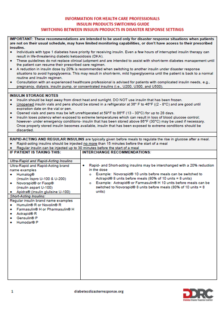
DDRC Insulin Products Switching Guide
Recommendations for healthcare professionals developed by the Diabetes Disaster Response Council to support people with diabetes in switching between insulin products in disaster response settings. Also available in Arabic and Spanish.
DDRC Insulin product Switching Guide
pdf
152KB
Guideline
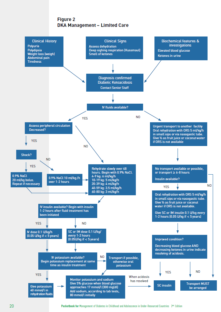
DKA treatment for youth in limited care setting
Flow chart for DKA care in limited resource setting from "Pocketbook for Management of Diabetes in Childhood and Adolescence in Under-Resourced Countries". Also available in Spanish
LFAC-ISPAD-Pocketbook-2nd-edition-english-web all book 20
pdf
111KB
Guideline
IDF WPR Diabetes Care and Disasters Manual 2nd Edition 2022
This manual identifies means to reduce the negative impact of natural disasters and promotes the sharing of knowledge to increase community resilience to natural disasters. The second edition includes substantial updates informed by recent disaster experience learnings. Also available in Urdu.
link to https://idf.app.box.com/s/pno1bkxgb9814w1hqkumvcg6q4vbxj2i
Download
Guideline
Pocketbook for management of diabetes in childhood and adolescence in under-resourced countries, 2nd edition
The Pocketbook provides basic background on diabetes in children and clear advice for initial management of diabetic ketoacidosis, initiation of maintenance insulin therapy, complications screening, and other key components of care. It is aimed for practical use in emergency situations and clinics that are developing expertise in managing diabetes in children.
Pocketbook Diabetes in Childhood 2nd Edition
pdf
1MB
Article
Storing and delivering insulin during a disaster
This document provides relevant information, including references and information sheets from diabetes organisations on storing and delivering insulin. Also available in Spanish. Translation provided by Dr Claudia Pieper.
Storing and Delivering Insulin During a Disaster
pdf
550KB
Article
Thermal stability and storage of human insulin (Review)
Richter B, Bongaerts B, Metzendorf M-I., Thermal stability and storage of human insulin, Cochrane Database of Systematic Reviews 2023, Issue 11. Art. No.: CD015385.
Abstract also available in Spanish.
Cochrane review insulin stability
pdf
999KB
Resources for first responders and emergency services
Guideline
DDRC - Tips for first responders
Guideline for caring for people with diabetes in an emergency. Also available in Spanish. Translation provided by Dr Claudia Pieper.
DDRC First Responder information ENGLISH
pdf
681KB
Guideline
The needs of people with diabetes and other chronic conditions in natural disasters (extract)
A guide for emergency services, local councils and not-for-profit organisations. Also available in Spanish. Translation provided by Dr Claudia Pieper.
The needs of people with diabetes in disasters and emergencies 2025
pdf
1B
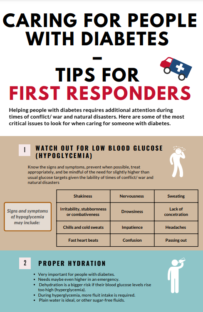
Guideline
Tips for first responders caring for people with diabetes
Guideline developed by International Alliance for Diabetes Action and Diabetes Education for All. Also available in Arabic
Tips to First Responders - EN
pdf
150KB
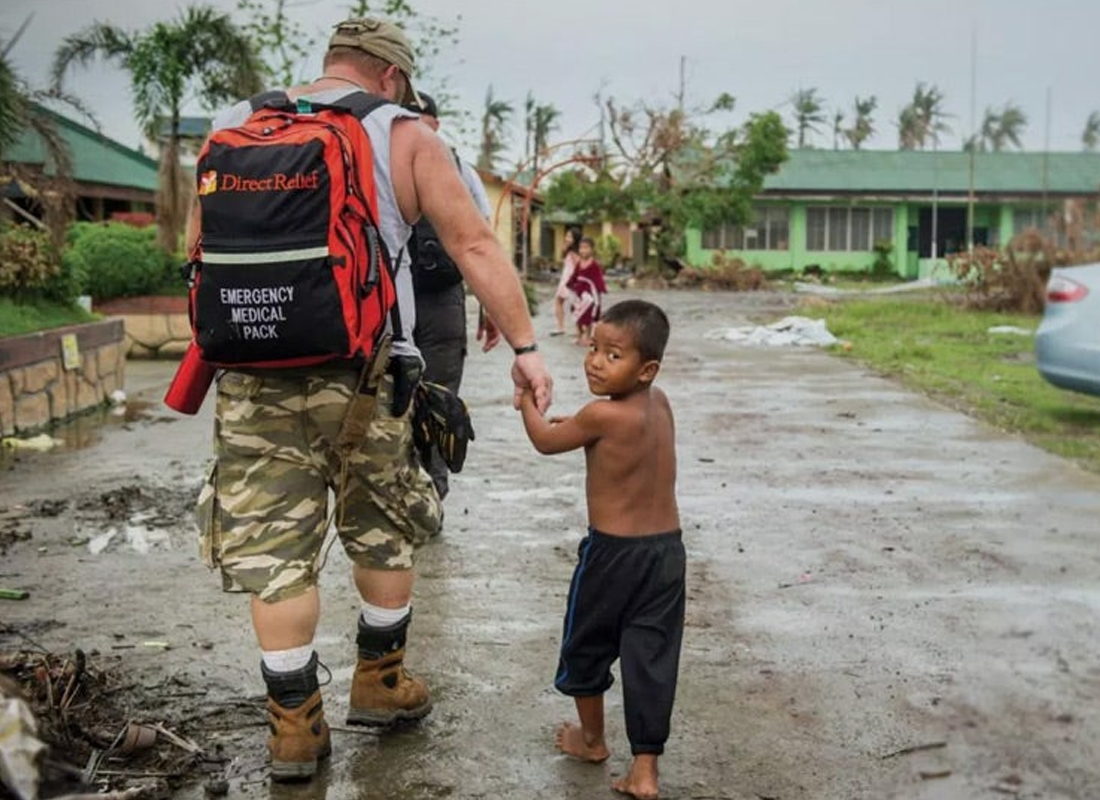

Partnership with Direct Relief
We have partnered with Direct Relief since 2009 to provide diabetes medication and monitoring to vulnerable populations during humanitarian emergencies.
In 2019, IDF and Direct Relief joined forces in a pilot project to encourage healthcare manufacturers to donate diabetes-related medications and supplies for diabetes care in humanitarian settings. This partnership has resulted in over 5 million tablets of oral medication, insulin, and supplies being distributed to countries on four continents.
Emergency relief has been provided to Ukraine following the Russian invasion and Turkey/Syria in the aftermath of the earthquake that struck the region earlier this year.
Direct Relief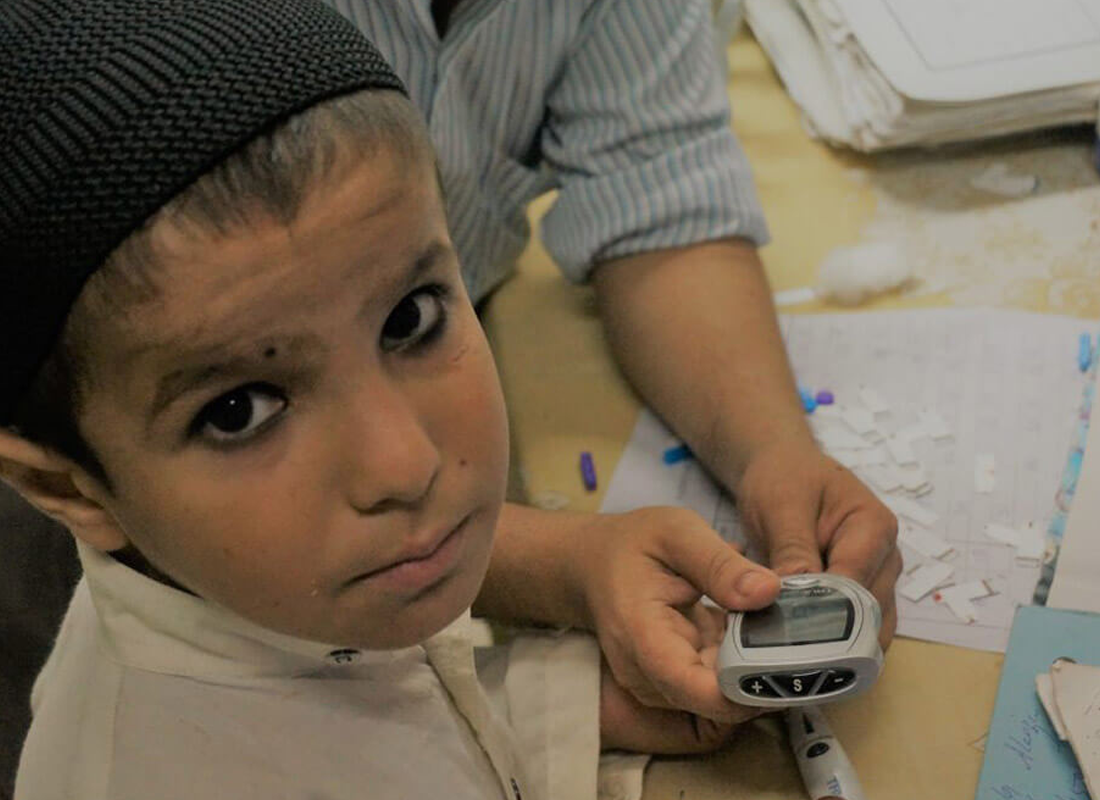
Life for a Child
In 2000, IDF established the Life for a Child programme in response to the situation facing many young people with type 1 diabetes in less-resourced countries.
The vision of Life for a Child is that no child should die of diabetes.
Since 2018, the programme has been under the auspices of Diabetes New South Wales. In addition, several IDF Members are in-country partners, and others support the programme.
Life for a Child supports over 60,000 young people with type 1 diabetes and other forms of diabetes in more than 50 countries. The programme is also recognised globally for its initiatives in advocacy and research.
Life for a Child