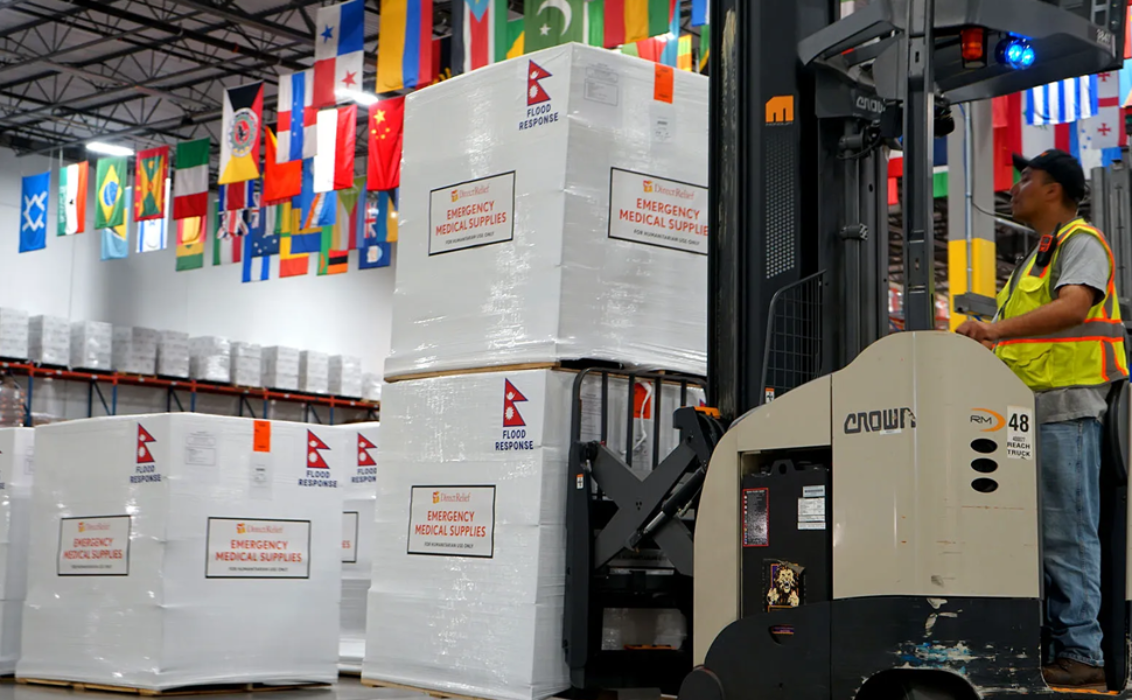
Medical aid from Direct Relief departs for Nepal to support health services following the country’s devastating flash floods. (Tori Gordon/Direct Relief)
On Wednesday, 26 August, a major disaster struck northern Nepal near the Nepal–China (Tibet) border after a collapse involving glacier ice, rock and debris sent a fast-moving surge of mud, ice and water into the Bhote Koshi and Trishuli river systems. The flooding has caused extensive loss of life and significant damage to homes, health facilities and essential infrastructure. Search-and-rescue operations are ongoing, and the risk of further flooding remains high.
As of 3 September, Nepal’s National Disaster Risk Reduction and Management Authority reported 1,204 deaths and 4,247 people unaccounted for, while more than 10,000 people have been rescued. UNICEF estimates that around 65,000 people, including more than 22,000 children, are affected across Rasuwa, Nuwakot, Dhading, Gorkha and Tanahun. Six health facilities were damaged, including four completely, while access to two hospitals was also disrupted.
The International Diabetes Federation (IDF) extends its deepest sympathies to everyone affected by this disaster. It is particularly concerned about the impact on the estimated 1.3 million adults aged 20–79 living with diabetes in Nepal. Nepal has the fourth highest number of adults living with diabetes in the IDF South-East Asia Region.
Humanitarian support for people living with diabetes
People living with chronic conditions such as diabetes can be especially vulnerable during humanitarian emergencies when disruption to healthcare services, displacement and damage to infrastructure can interrupt access to essential medicines, supplies and care.
IDF transnational member Direct Relief is coordinating with humanitarian partners to assess health needs and develop its response. Direct Relief is already providing emergency financial support to its long-standing partner Mountain Heart Nepal, which is responding directly in the affected districts. Direct Relief also regularly supplies Nepal’s public healthcare system with general medical aid and supports several health facilities in the Kathmandu Valley.
IDF has compiled a selection of resources to support people living with diabetes, healthcare professionals and first responders during emergencies.
The International Diabetes Federation will continue to monitor the situation closely and provide further updates as more information becomes available.


