Self-monitoring blood glucose (SMBG) remains essential to everyday diabetes management for many people living with diabetes, especially in low- and middle-income countries.
Blood glucose meters, test strips, lancets, and lancing devices can provide specific, in-time readings. This helps people with diabetes better understand how food, medication, exercise, illness and daily routines affects their blood glucose levels.
These supplies can be used on their own or alongside newer technologies such as continuous glucose monitoring (CGM) systems. The right approach depends on individual needs, treatment plans, lifestyle factors and advice from a diabetes care team.
What is SMBG?
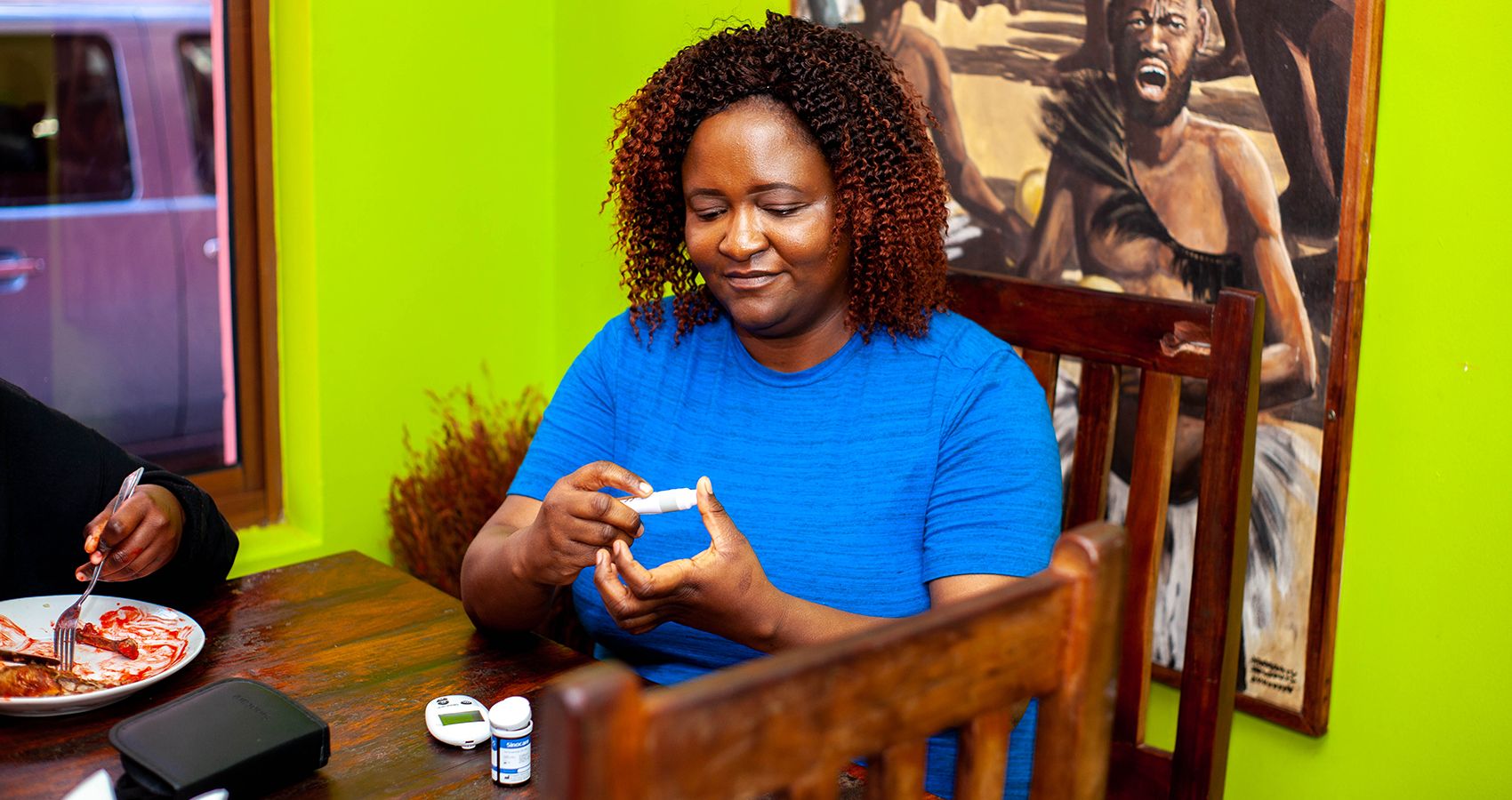
Self-monitoring blood glucose (SMBG) usually involves a small blood sample, often taken from the fingertip, and a blood glucose meter that displays the result. These tools can help people make informed daily decisions and identify patterns over time.
Common blood glucose monitoring supplies include:
- Blood glucose meter
- Test strips
- Lancing device (a small handheld tool used during finger-prick blood glucose testing)
- Lancets (small, sterile needles used for finger-prick blood glucose testing)
- Sharps disposal container
- Record book, glucose diary or tracking app
- Control solution for checking meter performance
A standard blood glucose meter usually includes a lancet for finger-prick testing, a digital display and a place to insert a test strip. Blood glucose meters are mostly used by people with diabetes managed with insulin and by some people taking medication that may increase the risk of low blood glucose.
Finger-prick testing
Finger-prick testing remains a key part of blood glucose monitoring for many people living with diabetes. It involves using a lancing device and a small lancet to make a controlled puncture in the skin, allowing a small blood sample to be collected. The sample is then measured using a blood glucose meter.
The result provides a record of blood glucose at that exact time, which can be helpful before or after meals, during physical activity, when ill or when symptoms of high or low blood glucose occur.
Diabetes test strips are an indispensable part of this process. A small drop of blood is placed onto the strip, which is then read by the meter.
To support accurate results:
- Use test strips designed for the specific meter.
- Check the expiry date before testing.
- Store strips as directed by the manufacturer.
- Close the container immediately after use, when required.
- Keep strips away from excess heat, moisture and direct sunlight.
- Follow the meter and strip instructions carefully.
Tips to make finger-prick testing more comfortable
Small changes can make routine blood glucose testing easier and more comfortable.
Helpful tips include:
- Rotating testing sites regularly.
- Using the side of the fingertip where appropriate.
- Washing and drying hands before testing.
- Changing lancets regularly.
- Using the lowest effective lancing depth.
- Avoiding repeated testing in the same place.
- Keeping your hands warm encourages blood flow.
A healthcare professional can provide personalised advice on testing technique, meter use and how often to check blood glucose.
Using SMBG with CGM
Diabetes management does not always mean choosing between SMBG and newer technology. Many people use a combination of blood glucose meters, test strips and continuous glucose monitoring.
For example, a person may use a CGM to track glucose trends throughout the day while still carrying a blood glucose meter for confirmation testing.
Traditional blood glucose monitoring is still useful when:
- Symptoms do not match sensor readings.
- A sensor reading seems unexpected.
- A person is unwell.
- A device is unavailable or not working.
- Confirmation is needed before making a management decision.
- Specific guidance has been given by a diabetes care team.
Using both approaches where appropriate can give a broader picture of glucose patterns and support safer, more confident decision-making. The most suitable combination of blood glucose monitoring supplies and devices will depend on the person, their management plan and their clinical needs.