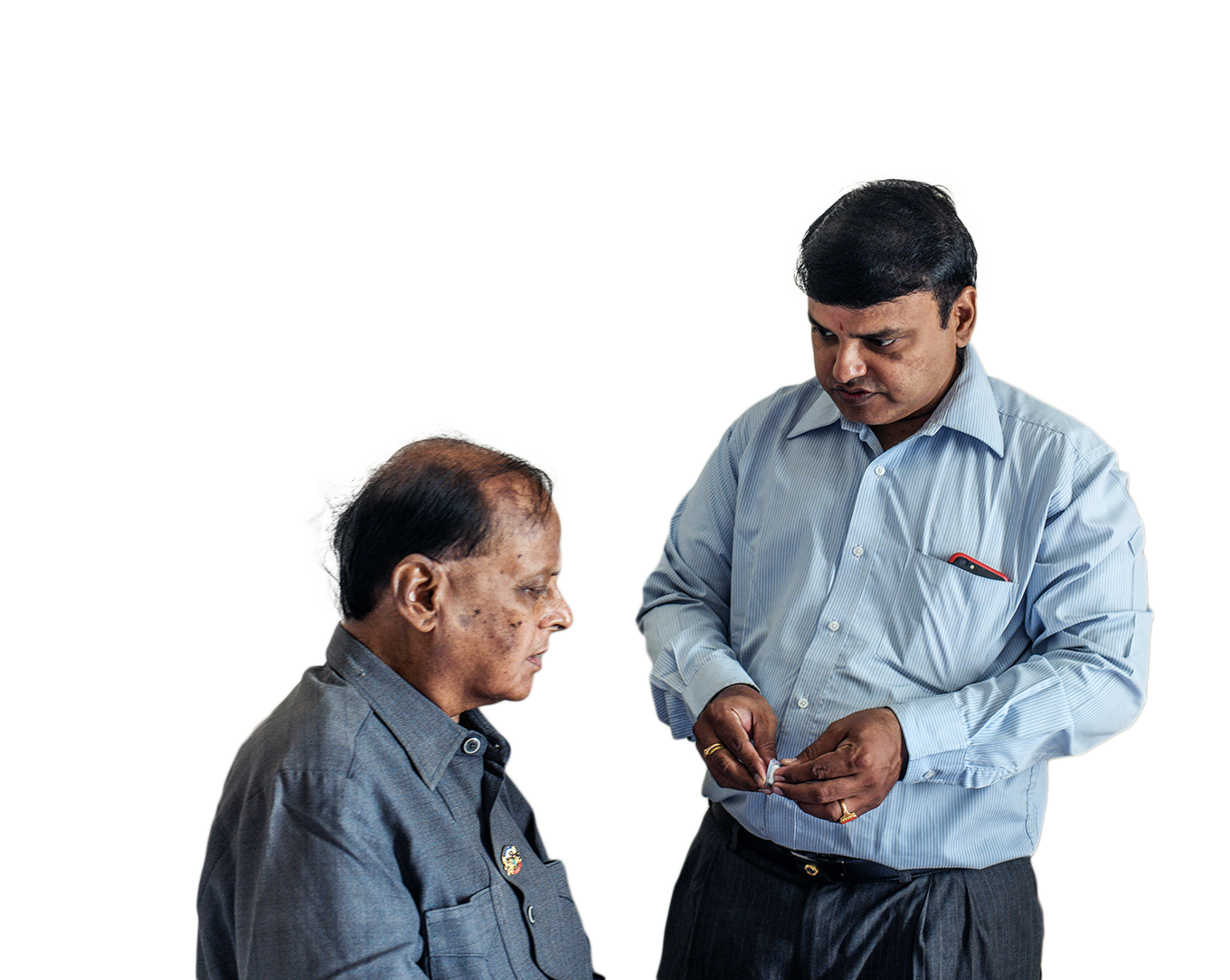
The IDF Type 2 Diabetes and Cardio-Renal Complications programme, through the iCaReMe registry, provides global data on prevalence, quality of care and outcomes for people living with these complications.
Cardiovascular and kidney disease are the two most common and life-threatening complications of type 2 diabetes. However, global data on prevalence, quality of care and outcomes for people living with these complications are not widely available.
How registries can help
Diabetes and diabetes complications registries can help deliver better care, decrease healthcare expenditure and save lives. Registries also facilitate epidemiological research that helps identify trends and inform campaigns for policy change to improve the lives of people with diabetes.
The absence of registries and epidemiological data on type 2 diabetes and cardio-renal complications is particularly apparent in low- and middle-income countries. IDF has initiated the Type 2 Diabetes and Cardio-Renal Complications programme to address the shortfall.
The initiative aims to:
- Build access to diabetes registries for healthcare professionals (HCPs) in low- and middle-income countries
- Advocate for policies that improve the quality of care
- Raise awareness of the risk and potential consequences of cardio-renal complications in people with diabetes

The iCaReMe registry is a joint effort among researchers, healthcare professionals, clinicians, and people living with diabetes to share real-world data on treatment and quality of care for people with type 2 diabetes, high blood pressure, heart failure and chronic kidney disease in clinical practice.
The registry provides a cloud-based tool for healthcare professionals to track data and follow up on people with diabetes and cardio-renal complications.
More than 490 HCPs from 33 countries have uploaded data on more than 59,000 people with type 2 diabetes to the iCaReMe registry.

IDF iCaReMe Centers for Integrated Care
IDF iCaReMe Centers for Integrated Care are specialised clinics that provide comprehensive, team-based care for people living with diabetes and diabetes-related complications. Using an integrated model, these clinics bring together healthcare professionals such as endocrinologists, cardiologists, and nephrologists.
This team-based model ensures early detection and treatment of metabolic, cardiovascular, and kidney-related complications, providing people with diabetes with streamlined evaluations, unified treatment plans, and improved long-term outcomes. To achieve this the centers use the iCaReMe registry for patient enrolment, coordination and to gather quality metrics for improved outcomes.
Current IDF iCaReMe Centers for Integrated Care:
- Apollo Clinic (Dibrugarh, India)
- Artham MultiSpeciality Hospital (Ahmedabad, Gujarat, India)
- Department of Medicine, Faculty of Medicine, University Malaya (Kuala Lumpur, Malaysia)
- Diabetes Association of the Republic of China (Taiwan, Province of China)
- Faruk Medical City (Sulaimani, Kurdistan, Iraq)
- MP Shah Hospital (Nairobi, Kenya)
Resources for HCPs


These training videos accompany the iCaReMe registry guidelines below and show you how to enter, manage and analyse patient data in the registry.
iCaReMe registry resources

Guideline
iCaReMe registry: CRF completion guideline
This guideline explains step-by-step how to use the iCaReMe electronic case report forms (CRF), which gives real-world data for healthcare professionals on patient management and quality of care.
CRF Completion Guideline
pdf
6MB

Guideline
iCaReMe registry tool: RWE Box
The RWE (Real World Evidence) Box is the iCaReMe registry data capture, management and analytics tool. It enables clinical, medical and real-world evidence research.
RWE Box Introduction 2021 (1)
pdf
4MB
Report
iCaReMe registry: gaps in early diagnosis
Take CaReofMe is a subset of the iCaReMe registry. It is an initial study on the gaps in early diagnosis of cardiorenal complications among people with type 2 diabetes from six countries.
Take CaRe of Me Programme
pdf
712KB
E-poster
iCaReMe registry study outcomes
These posters from 2021 - 2023 present data findings from the iCaReMe study.
TakeCaReofMe Posters 2021-2023
pdf
4MB

Article
DISCOVER Global Registry (DGR)
The iCaReMe registry is the continuation of the DISCOVER Global Registry (DGR) with an expansion on cardio-renal complications. DGR provides valuable insight into people with type 2 diabetes undergoing treatment in clinical practice. This registry helps to understand the patterns and effects of treatment approaches on cardio-renal-metabolic multimorbidities. It also aims to increase the real-world evidence base established by the DISCOVER study.
iCaReMe DISCOVER Global Registry (DGR)
pdf
2MB

Would you like to contribute to the study?
To be eligible for inclusion in the study, you must be a healthcare professional, and your patient(s) must meet the following criteria:
- Be over 18 years of age.
- Have type 2 diabetes and cardio-renal complications (heart failure, chronic kidney disease).
- Provide written informed consent of willingness to participate in the study.
For more information on the T2D and cardio-renal complications programme, including access to the iCaReMe registry and how to participate in the study, please contact:
Paraskevi Salpea
IDF Epidemiology Manager
paraskevi.salpea@idf.org
