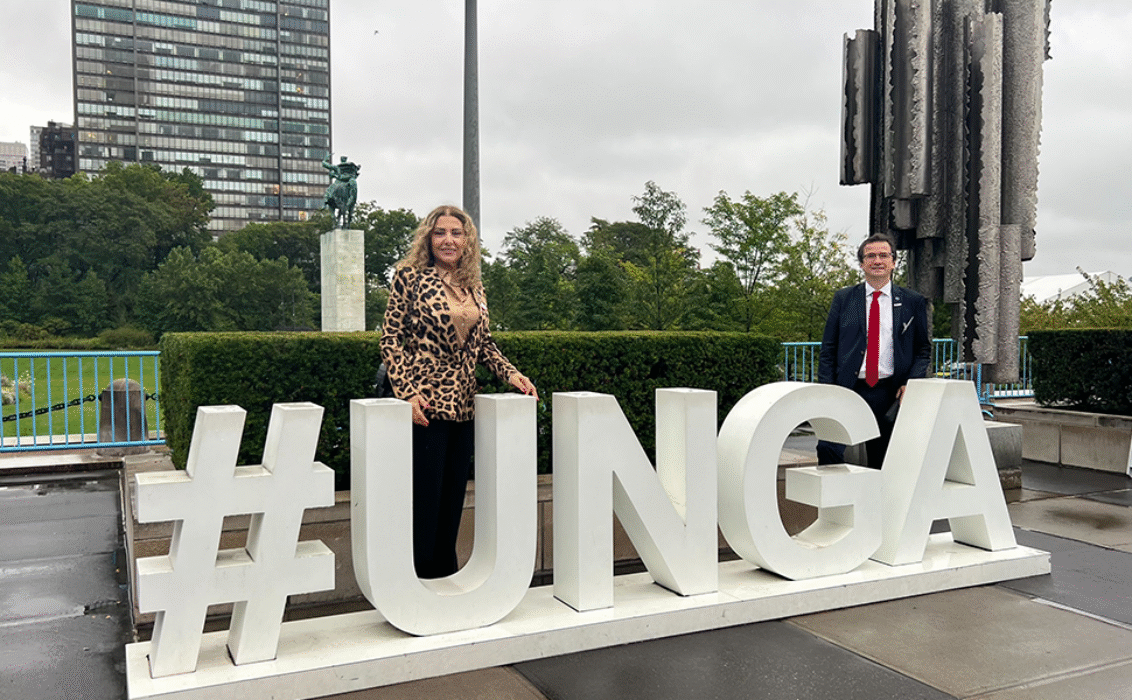
(Image: IDF President Prof Peter Schwarz and IDF Vice President Dr Jackie Maalouf outside the UN Building in New York)
On 25 September, Member States gathered in New York for the United Nations (UN) High-Level Meeting (HLM) on Noncommunicable Diseases (NCDs), during which a Political Declaration was discussed and supported by a majority of UN member states. The declaration was adopted on 15 December.
The International Diabetes Federation (IDF) welcomes the convening of this HLM and the opportunity it created over the past year to bring together governments, civil society and the global NCD community for constructive discussions on the prevention and control of NCDs.
Despite this positive step, IDF regrets that item 50 of the Political Declaration on diabetes falls short of recognising key priorities for the millions of people living with the condition worldwide:
- It omits any reference to the WHO Global Diabetes Compact or the diabetes coverage targets endorsed by the World Health Assembly in 2022, both of which provide an essential framework for improving prevention, care and treatment.
- It removes the reference to insulin that was included in the zero draft of the document.
- It overlooks the specific challenges faced by people living with type 1 diabetes, who require a regular daily supply of insulin and are particularly vulnerable when access to insulin and glucose monitoring technologies is disrupted or unaffordable.
- It frames diabetes care primarily as a means to reduce the risk of complications such as renal and cardiovascular disease, rather than as a way to improve the well-being and quality of life of people with the condition. This narrow framing reduces diabetes to a risk factor for other NCDs, rather than recognising it as a major health challenge in its own right.
In addition, the Political Declaration misses a vital opportunity to reaffirm the importance of meaningfully engaging people living with NCDs in the development and implementation of policies that affect their lives. Ensuring that the voices of those most impacted are heard is essential to delivering equitable and effective responses to NCDs.
Looking ahead, IDF remains optimistic about the global diabetes agenda. The WHO Global Diabetes Compact and the diabetes coverage targets provide a strong foundation for action. It is now crucial that Member States translate these commitments into tangible national measures that expand access to affordable insulin, essential technologies and comprehensive care. By doing so, governments can make a lasting difference in the lives of people living with diabetes and other NCDs worldwide — ensuring that no one is left behind.